Find waterproof customized candle warning label for bottles, shipping, and medicine
Source 30 options for waterproof customized candle warning label from verified suppliers. Compare features like digital and flexographic printing, material types including vinyl and paper, and customization capabilities for bottles, shipping labels, and medicine packaging.
Key considerations
Products List


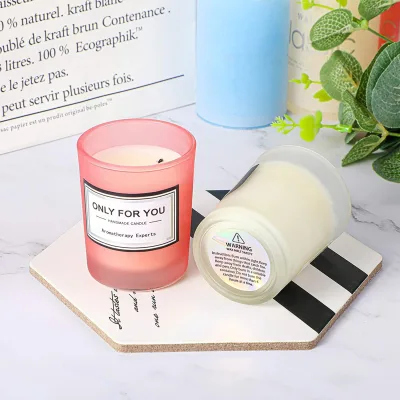


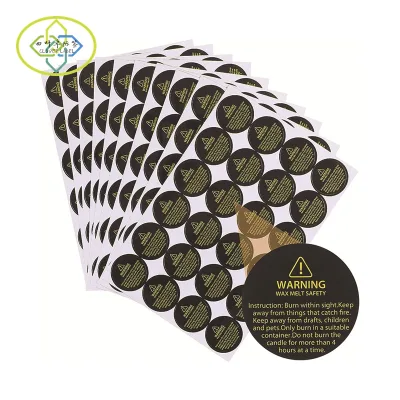
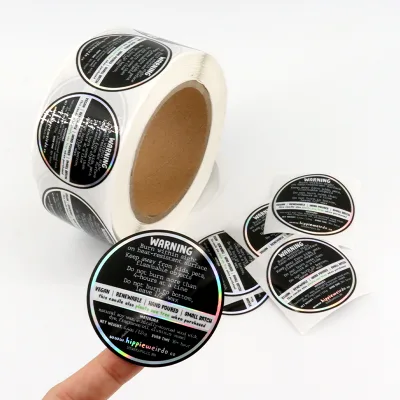

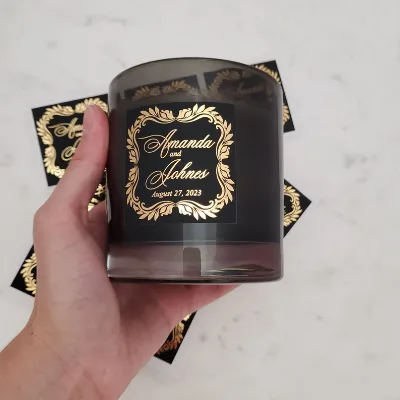
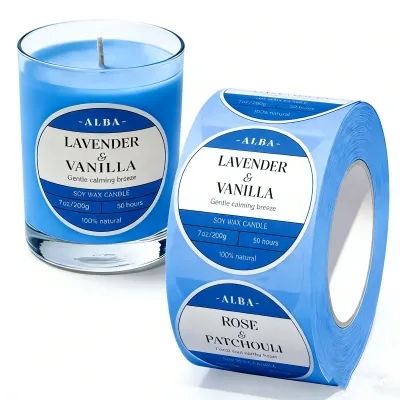
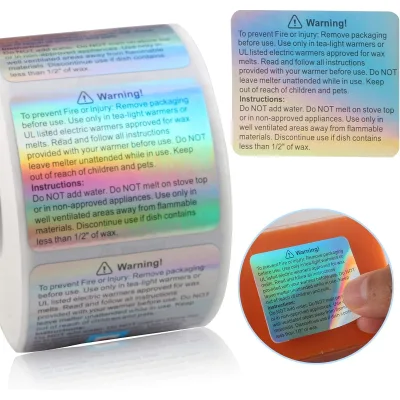
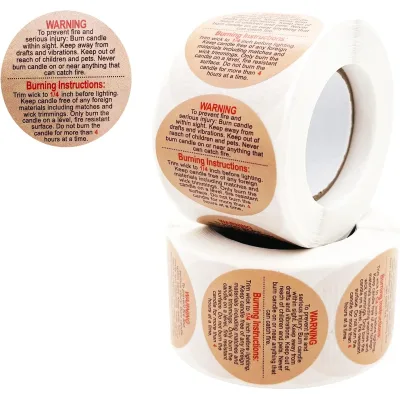
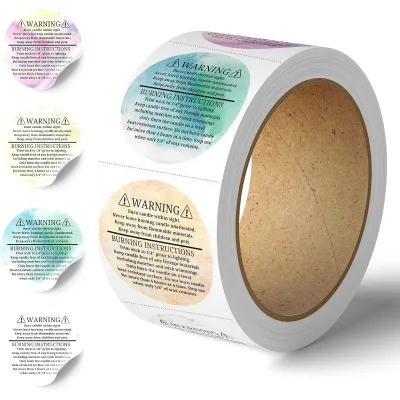


Comprehensive Sourcing Guide
Strategic Sourcing Guide for Waterproof Customized Candle Warning Labels
Procuring specialized adhesive labels for the candle industry requires a nuanced understanding of material science, regulatory compliance, and supply chain logistics. The core keyword "waterproof customized candle warning label" indicates a demand for products that must withstand specific environmental conditions while delivering precise safety messaging. In the B2B market, these labels are not merely decorative; they are critical compliance tools that must adhere to fire safety standards and remain legible under varying temperature and humidity conditions. This guide synthesizes available market data to provide a disciplined framework for buyers evaluating suppliers, ensuring that procurement decisions are based on verified attributes rather than unconfirmed marketing claims.
Material Selection and Environmental Durability
The foundation of a successful candle label lies in the face material and the adhesive formulation. The supply data indicates a diverse range of materials available in the market, including Vinyl, Paper, PVC, PET, and PP, with some suppliers offering Gold Foil or customizable face materials. For a "waterproof" requirement, Paper-based labels are generally insufficient unless heavily coated, whereas Vinyl and PVC are the industry standards for moisture resistance. The observed product attributes highlight that "Waterproof" is a key feature for specific listings, suggesting that buyers must explicitly verify the material composition against this claim.
When sourcing for candle applications, the label must resist the heat generated by the burning wax and the potential condensation or humidity in storage environments. The data notes that "Face Material" can be selected as "Pet/PVC/PP/Paper/Customizable," allowing for tailored solutions. However, buyers should not assume all listed products meet the waterproof criteria. The distinction between "Vinyl" and "Paper" in the product attributes is critical; Vinyl and PVC offer superior water resistance compared to standard paper. Furthermore, the "Industrial Use" category often lists "Packing label" or "Custom Sticker," which implies that the adhesive strength must be sufficient to remain attached to curved candle jars or containers without peeling, even when exposed to minor moisture.
Printing Technologies and Customization Capabilities
The visual fidelity and durability of the warning message depend heavily on the printing technology employed. The market data reveals a mix of printing types, including Digital Printing, Flexographic Printing, and Letterpress Printing. Each method offers distinct advantages for custom candle labels. Digital printing is ideal for short runs and high-detail customization, allowing for complex warning graphics and variable data. Flexographic printing is often preferred for medium to high-volume runs, offering consistent color reproduction and speed. Letterpress printing, while less common for high-volume commodity goods, provides a tactile, premium feel that may be desirable for luxury candle brands.
The "Customization" attribute is marked as "Available" across the board, and "Custom Order" is accepted by suppliers. This flexibility extends to the "Size & Shape," which can be "Customized," "Rectangle," "Round," "Square," or "as Required." The "Color" options range from "Mixed Color" to "Cmyk or Pantone," ensuring brand consistency. However, buyers must verify that the chosen printing method is compatible with the selected face material. For instance, certain inks may not adhere well to specific PVC formulations without a pre-treatment process. The "Artwork Format" requirements, listed as "Ai, Pdf, CDR, Psd," indicate that suppliers expect professional-grade digital files to ensure the warning text remains sharp and legible.
Compliance, Certification, and Regulatory Verification
For warning labels, particularly those related to fire safety and candle usage, compliance is non-negotiable. The supply data mentions specific certifications such as "ISO9001" and "SGS," which are indicators of a supplier's quality management system and third-party testing capabilities. While these certifications are present in the dataset, buyers must not assume that every product listing carries them. Instead, these certifications should be treated as a benchmark for supplier reliability. A supplier holding ISO9001 certification is more likely to have consistent quality control processes, which is vital for ensuring that every batch of warning labels meets the required safety standards.
The "Standard" attribute is listed as "Custom" or "Custom Size Accepted," which implies that there is no single universal standard for candle warning labels in the provided data. This places the burden on the buyer to verify local and international regulations, such as those from the Consumer Product Safety Commission (CPSC) in the United States or the European Union's General Product Safety Regulation (GPSR). The "Industrial Use" field mentions "Medicine" and "Food," suggesting that some suppliers may have experience with highly regulated industries, which could be a proxy for their ability to handle strict compliance requirements for candle labels. Buyers should explicitly request test reports or compliance documentation for the specific warning text and material composition to ensure they meet the legal requirements of their target market.
Cost Drivers and Minimum Order Quantity Analysis
Understanding the cost structure of custom candle labels is essential for budgeting and inventory planning. The observed price range in the market is $0 to $2.08 USD, but this wide variance likely reflects differences in material quality, printing complexity, and order volume. The "MOQ" (Minimum Order Quantity) ranges from 50 to 5000 units, with specific listings showing MOQs of 100, 3000, or 5000 pieces. This variability allows buyers to choose a supplier based on their production scale. Small businesses may find the 50-100 piece MOQs attractive for prototyping or niche collections, while large manufacturers will likely require the 3000-5000 piece runs to achieve economies of scale.
Several factors drive the final cost. The choice of material is a primary driver; PVC and Vinyl are generally more expensive than standard paper. The "Printing Type" also influences cost, with digital printing often having a higher per-unit cost for large runs compared to flexographic printing. Additionally, the "Customization" level, such as unique shapes or special finishes like gold foil, adds to the production complexity and cost. The "Packing" method, whether "Box," "Rollings," or "Sheets," can also impact logistics costs. Buyers should request detailed quotes that break down these components to understand the true cost per unit and avoid hidden fees related to tooling or setup.
Supplier Evaluation and Logistics Considerations
Evaluating a supplier for candle warning labels requires a holistic view of their capabilities beyond just the product specifications. The data indicates that the "prod_origin" is primarily "China" or "Shandong, China," with specific locations like "Shandong Yantai" mentioned. This geographic concentration suggests a mature supply chain in the region, but buyers should verify the specific factory location to assess logistical risks. The "Delivery Term" options include "Fob," "CNF," and "CIF," giving buyers flexibility in managing their own shipping and insurance. The "Shipment Port" is listed as "Shanghai, Wuxi, Ningbo," which are major hubs, but buyers should confirm the actual port of loading to estimate transit times accurately.
Lead time is another critical factor. The data specifies a "Delivery Time" of "7-10 days" for some products, but this likely refers to production time only and excludes shipping. Buyers must clarify the total lead time, including production, quality checks, and transit. The "Free Sample" attribute is available, which is a valuable tool for verifying the physical quality of the label before committing to a large order. When evaluating suppliers, buyers should look for those who offer clear communication regarding the "Artwork Format" and "Payment Term" (e.g., "T/T, Paypal, West Union"). A supplier that is transparent about these terms and willing to provide samples demonstrates a commitment to partnership and quality assurance.
Quality Control and Long-Term Procurement Strategy
Ensuring the long-term success of the procurement relationship requires a robust quality control (QC) strategy. The "Feature" list includes "Waterproof," but buyers must validate this claim through physical testing, such as immersion or humidity exposure tests, rather than relying solely on the supplier's description. The "Certification" of "SGS" suggests that third-party testing is possible, and buyers should request specific test reports for the waterproofing and adhesive strength of the labels. The "Shape" options, including "Rectangle, Round, Square, Customized," require precise die-cutting tools; any deviation in shape can affect the application process and the final appearance of the product.
For long-term procurement, consistency is key. The "Custom" nature of the "Standard" and "Size" means that reordering the same product requires precise documentation of the original specifications. Buyers should maintain a detailed "Product Specification Sheet" that includes the exact material type, adhesive formulation, printing method, and color codes (Pantone or CMYK). The "Industrial Use" classification as "Packing label" or "Custom Sticker" should be clearly defined to ensure the supplier understands the end-use environment. By establishing a clear set of requirements and maintaining open communication with the supplier, buyers can mitigate the risks of quality drift and ensure that their candle warning labels continue to meet safety and aesthetic standards over time.
Summary of Key Sourcing Parameters
To facilitate a structured comparison during the supplier selection process, the following table summarizes the critical parameters derived from the market data. This overview helps buyers quickly identify which suppliers align with their specific needs for waterproof, customized candle warning labels.
| Parameter | Observed Market Range / Options | Buyer Verification Action |
|---|---|---|
| Material | Vinyl, Paper, PVC, PET, PP, Gold Foil | Confirm waterproof capability; request material safety data sheets. |
| Printing Type | Digital, Flexographic, Letterpress | Match printing method to volume and detail requirements. |
| MOQ | 50 to 5000 PCS | Select based on inventory capacity and cash flow. |
| Certification | ISO9001, SGS (Variable) | Request specific test reports for the product batch. |
| Origin | China (Shandong, Yantai) | Verify factory location and logistics capabilities. |
| Delivery Time | 7-10 Days (Production) | Clarify total lead time including shipping and customs. |
| Customization | Size, Shape, Color, Design | Ensure all design files meet required formats (Ai, Pdf, etc.). |
| Packing | Box, Rollings, Sheets | Confirm packaging protects labels during transit. |
By adhering to these evidence-based guidelines, buyers can navigate the complexities of sourcing waterproof customized candle warning labels with confidence. The focus remains on verifying attributes, understanding cost drivers, and ensuring compliance, thereby minimizing risk and maximizing the value of the procurement investment.
FAQs
What materials are suitable for waterproof candle warning labels?
Vinyl and PVC are the industry standards for waterproof candle warning labels due to their moisture resistance. Paper options exist but require specific coatings to meet waterproof criteria, while gold foil and PET are also available as customizable face materials for enhanced durability.
Can I order custom shapes and sizes for these labels?
Yes, suppliers accept custom orders for size and shape, offering options like rectangle, round, square, or fully customized dimensions. The product model and standard fields confirm that custom sizes are accepted, allowing buyers to tailor labels to specific candle jar geometries.
Which printing methods are available for custom candle labels?
Digital, flexographic, and letterpress printing methods are available in the market for custom candle labels. Digital printing suits short runs with high detail, while flexographic printing is preferred for medium to high volumes, and letterpress offers a premium tactile feel for luxury brands.
What is the typical minimum order quantity for these labels?
The minimum order quantity ranges from 50 to 5000 pieces depending on the supplier and product specifications. Specific listings show MOQs as low as 100 pieces or as high as 3000 and 5000 pieces, allowing flexibility for both small businesses and large manufacturers.
How long does production take for custom waterproof labels?
Production lead time is typically 7 to 10 days for some products, excluding shipping duration. Buyers must clarify total lead times as delivery terms like FOB, CNF, and CIF affect the final arrival date, and shipping ports include Shanghai, Wuxi, and Ningbo.
Are there certifications available for these label manufacturers?
Some suppliers hold ISO9001 and SGS certifications, indicating quality management systems and third-party testing capabilities. Buyers should verify these certifications per batch rather than assuming all listings carry them, as they serve as benchmarks for consistent quality control in regulated industries.